Monday, October 6, 2014

Karst and the Coast

The ride from the Postonja area to Piran is all downhill. The elevation goes from 550 metres above sea level to actual sea level, so it ended up being another nice and relatively easy ride.

There is a song written by John Mann of Spirit of the West. I think the original version of his song was inspired by Piran, but he changed the title to use 'Venice' instead as it had a better ring to it. Piran is a Venetian Gothic style town and at times you might think you were actually in Venice if you just listened to one of the Italian conversations in one of the many narrow alleyways. 


Piran's bragging rights are that it is the birthplace of Baroque violinist and composer Giuseppe Tartini (1692-1770) so there is a main statue of him looking over the square, which incidentally, has seen its fair share of flooding.

After I got settled in, I wandered around the town and appreciated the familiarity of being back in a coastal town.


Part of the coast has a sea wall of sorts so you can ride a fair bit of Slovenias 46 km of coastline as it meanders from Italy to Croatia. I had two days to enjoy the beaches, coastal life and associated food before heading to my cousin Mitja's so it was a very mellow pace and felt strangely similar to Kitsilano at times.


I headed up the hill to my cousin's place for the weekend and spent time becoming absorbed in their lifestyle. They have a farm that produces olives, grapes, vegetables and have chickens and pigs. The summer was one of the rainiest on record and people I spoke with dont remember a rainier summer. Its affected everything from salt production to ripening grapes and olives so there is an added amount of concern about this years harvest.
We spent alot of time eating. The dinner table is as much a gathering place as it is an appreciation for food in Slovenia. Every meal or glass of wine was for the most part produced from the farm. I've never been privy to the 100 metre diet.

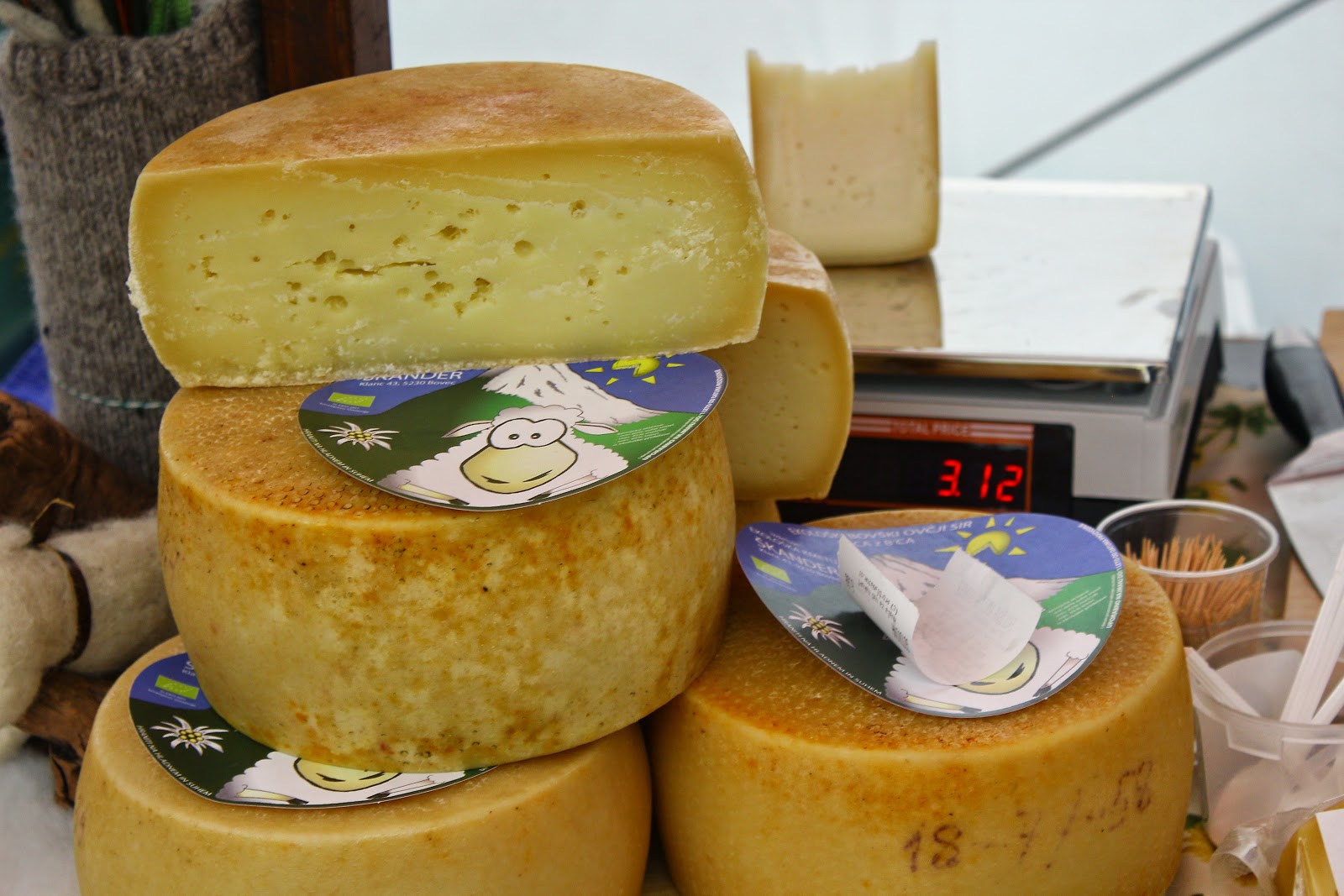


Premium imported flour.

Like mini nutty apples
Mitja thought it would be good to see the area via bike so after dusting off his bike and legs we headed out for a 'giro' as they call it. We stuck to the back roads and kept Croatia on our left or right for the most part, switchback depending. We headed to the Piranska Soltina, or the place where salt is made near Piran. As one of the signs mentioned, the only thing that has changed in the past 700 years of salt production is the clothing.
Sea water is brought in via a channel system as the fields are 1 metre lower than sea level. The surface that the water covers is called the petola which is a type of sea bottom organic material. It needs to be 100% intact so when the salt is left after evaporation its a smooth surface. The other minor detail is that it takes 14 days for the two or three inches of sea water to evaporate so that salt can be harvested. There wasnt one stretch of dry weather for two weeks so this summer, which also is a first, no salt was made. The weather has been good as of late so hopefully they can recoup some of their losses.
Man repairing the petola surface

Petola beds with sea water


Track for moving salt

Normally full of salt from me to Mitja this time of year


We made our way back along the coast up to Koper using some of the road and also some of the Parenzana railway line. It used to be operational from 1902 until 1935 and connected Trieste, Italy with Porec, Croatia. It used to transport fish, salt, food and then military but in 1935 as an act of attempting to get Slovenians to move out of the area, Italy ordered that it no longer be used. Its now a recreational trail that has been in use since its centenerary. 


The evening ritual is to go for a walk so each night we would meander along the roads and fields harvesting the last sunshine from the setting sun. When it rains as much as it does in Vancouver, I dont think you can grow weary of yet 'another Adriatic sunset'.


The Slovenian coast line is beautiful. I would never have associated Slovenia and beaches but the Adriatic sea at this time of year is a 'chilly' 20 degrees celsius and the beaches, for the most part, are quiet and empty.
The time I spent with Mitja on the farm was eye opening for how much work goes into maintaining a farm and making sure that there will be food for the rest of the year. They will be harvesting olives in two weeks time which means at the end of their regular workday they'll be working into the evening and their weekends will be booked up with producing the oil from the olives. To say that there is a lot of hard work at the farm is an understatement. As one of the family members told me after I said I hoped I wasnt interfering with any work, 'When family or guest of family visit is good; it means no work for time you are here'. 


Wednesday, October 1, 2014

Postojna. Castles & Caves

As I was slogging my way up yet another climb, I had a small break and just stopped. Partially to enjoy the silence but probably also to enjoy the stillness. Why am I doing what I'm doing? was the thought that came to mind. Its a question that probably cant be answered without some larger picture diagrams, but all the data may not be in just yet. I'll spare you the other thoughts that come as a result of spending a lot of time by oneself in a country that doesnt naturally converse in English. It has been an interesting trip in that regard so far though. Interestingly enough I found this humourous take on the language. Also educational. 
Slovene Language


I rolled into Postonja late on the Sunday and found the local hostel which like the previous place, also shared its space with a school but was much more inhabited. The area is known for its fortress of a castle called Predjama castle and its 20 kms of underground caves. It was a bit late by the time I got in so decided to head to the cave and castle the next day.
I first rode out to the castle and then was going to head back to the caves, the former being 10km from town. Its an amazing sight when you first see how it has been built. It looks as though nothing could penetrate the fortress.


Unfortunately it was penetrable and Erazem the occupant, Hungarian supporter and 15th century 'Robin Hood' who would steal from the rich and give to the poor, met his demise at the hands, and canon ball of the Austrians. When inside you get to see the matrix of how far back some of the passageways go into the cave, some leading up to the back of the mountain and others further down.

After appreciating as much of the castle as I could, I headed back to the Postojna caves for the 1:00 tour. I had originally signed up for the 3:00 thinking I would be longer at the castle. After chatting with the same ticket person I was now on the 1:00 tour. Relevant later.
The cave is one of two things that I've seen where my first reaction is 'holy shit'. The other being the grand canyon. As they say, photos dont do it justice. You take a train to start and after 5 minutes or so you end up at the start of the walking portion.


Area where a Christmas/New Year symphony is held.
There are varying accounts of how long it takes for a stalagmite to grow one millimetre, I heard between 30 and 100 years depending on pamphlets or guides. Given that math the cave is estimated to be 250 million years old. Men may build impressive castles into caves but nature seems to be phenomenally more impressive when building said caves.
After coming back into the daylight and letting my eyes adjust I stopped in for the third time to the ticket office. I handed through my 3:00 ticket to the girl that I'd been chatting with each time I changed my ticket, and after a moment of blushing she said she couldnt because she had to work that evening but would really like to. I had written on the back of the ticket, "Greva na kavo, na pijaco ponoci?". After our equal looks of "thats too bad" I said, "Maybe next time" and she agreed. My other thought was "Stick to your area code!". Some habits. . .
I was planning on heading to the coast the next day so decided to stop in at the Skocjan Caves on the way through. They are a UNESCO designated world heritage site and probably also why no photos were allowed. Our guide said there are 250 different animals, insects and fauna in the cave so its important to not disrupt their environment. The Reka river flows through the canyon and is responsible for shaping it in its current form. So perhaps there are now three things that have garnered my sentiments from earlier. The Skocjan caves are similar to the Grand Canyon, but just underground. One of the most amazing spaces that Ive been in.


It was a great day of being a tourist and for seeing all the amazing parts of Slovenia that are literally just underneath the surface. I am headed to the coast to get some sun and catch up on some omega 3's. People with a gluten sensitivity would die here.
Last meal at hostel kitchen. Postojna.


Its All Downhill From Here


I don't remember having a downhill portion of a bike ride that lasted 3 hours but I likely wont forget this one. I eventually ended up in Tolmin, about 84 kms away, but most of it downhill. The route from the Ruska Cesta eventually links up with the Soca River and it was never out of sight until I headed out from Tolmin. It starts in the Julian alps and carries onwards into the Adriatic sea some 138 kms later. 


I was tempted to stay in Bovec which was the original plan but it was only 1:00 when I got there so continued on. I thought I may as well keep riding and see where I get to. Where I got to was the small town of Tolmin. Its a little town that is not known for too much but as is the case with alot of smaller towns in the west, it is hilly and picturesque.


I went to the tourist information centre in town and got the address for an apartment that I was able to stay at. It was a 5 minute ride out of town and sounded like a good fit. Once I arrived I started talking with the owner in what Italian I could remember from grade 10, some broken Slovenian and her broken English. We did a shot of Slevovitz, as you do, and also a shot of the whiskey I brought. I went upstairs to see if she had a corkscrew I could borrow a little while later and as we started chatting she showed me her address book:


My family is from Belgium as well so Im sure there is a relation somewhere. I mentioned that my family is in Kanal, in the west part of Slovenia and she mentioned that her friend had been there on vacation from Belgium this summer. What are the odds. Of all the places I chose to stay at. Its a weird world. Also staying at the guest house were a couple from Ivrea, Italy, where my aunt and cousins live. Yah. Life.
The next day I headed out for a guided hike in the Tolmin gorge. It was great to see more of the area. I said goodbye to my host Ellena, and did a shot of slevovitz, as you do, at 11:00am and headed off for the mining town of Idrija.


Idrija was at its height, producing 13% of Europe's mercury in 1800, three centuries after it opened. After mercury was banned as an export in 2011 the mines no longer operate. If it sounds like an ecological disaster it may well be. Alot of the by-product was built on top of and is slowly leeching into the river and eventual Adriatic sea. The town itself is built into steep slopes and further up the valley there is a joke that dogs in the surrounding towns dont bark with their mouths as they need them to anchor to the side of the mountain.


The hostel I stayed at was out of the mind of Stanley Kubrick. Its a converted school that is now used as a hostel. It would have been great if there were other travellers there but I was the lucky one to have the whole place to myself (the hostel worker rides the 5 kms home) It was creepy.


Idrija is also known for its lace and zlickrofi (ravoli filled with cheese, bacon and chives). I knew I would appreciate the zlickrofi but after visiting the museum I had a new appreciation for how the finer things in life are made.


Idrija is a great town with an amazing perspective on life before and after mineral dependency. The host that was at the hostel worked in the mines for 8 years and eventually had to leave when the mine began to shut down. He explained that the work was tough but despite the health implications it was still a job that paid well. Not sure if he preferred the hostel life to the mine. I should have asked which one was more tolerable.
Tolmin Gorge

Bee panels. Known as kranjic hives.

Reminder of how western Slovenia was.

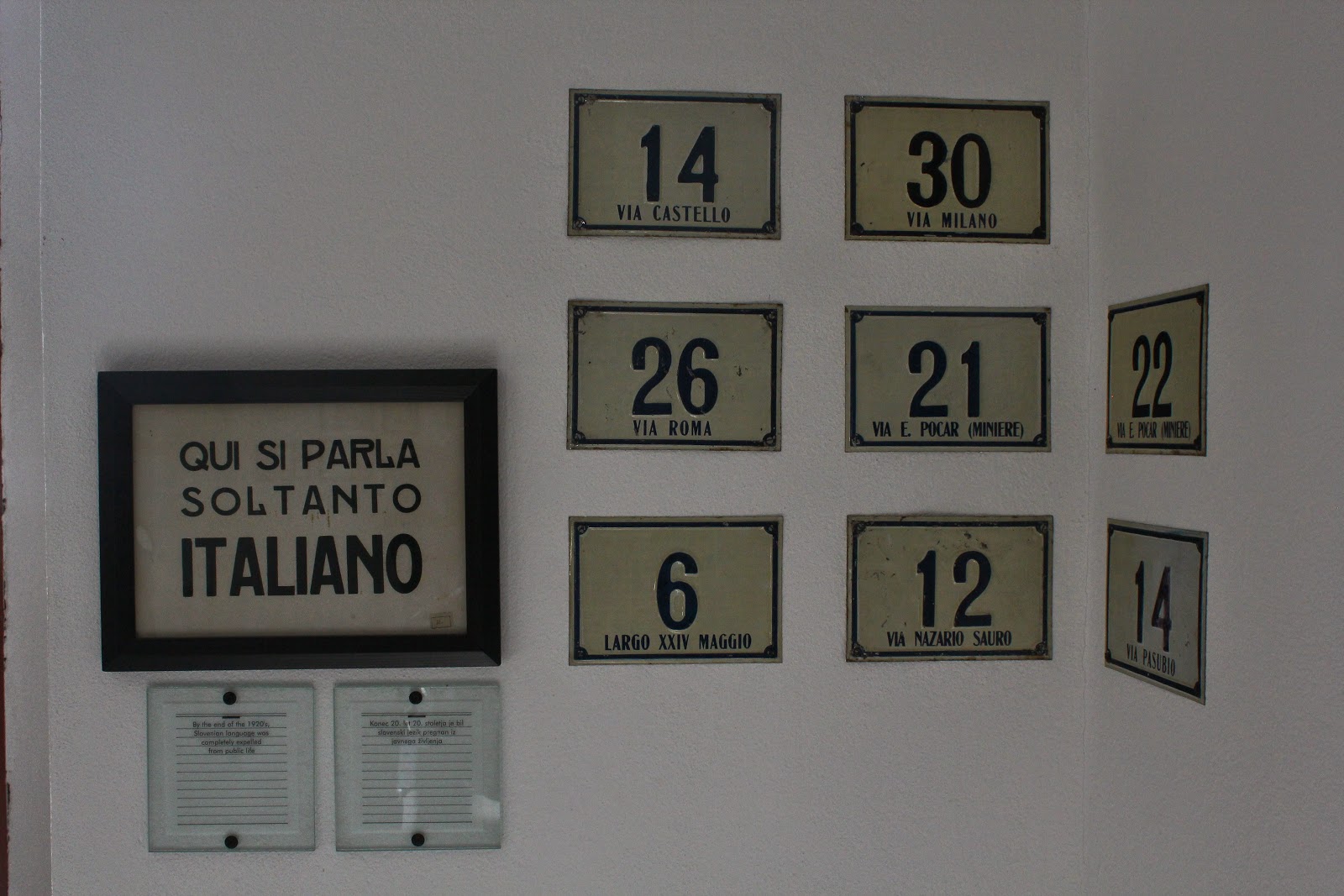
Street names when the Italians were here.

Method of knowing which miners finished the day.
Apex of valley climb on a fault line. Heading to Idrija.